Ribbon Bow Embroidery Design
First Impressions: Delicate, Feminine, and Instantly Recognizable
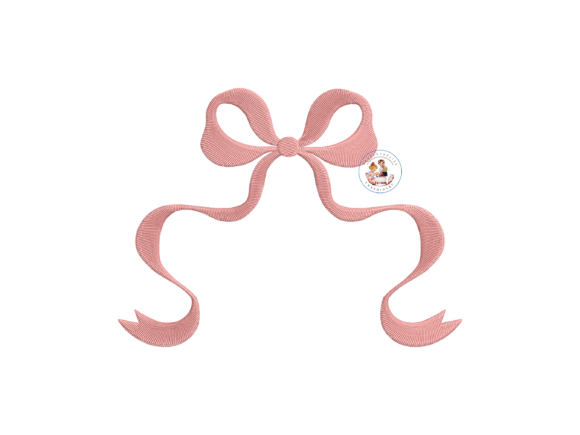
When I opened the Ribbon Bow Embroidery Design file, what struck me first wasn’t just the soft pink palette—it was the quiet confidence in its shape. This isn’t a fussy bow or an over-engineered flourish. It’s a Monogram ribbon coquette bow with gentle curves, balanced proportions, and that subtle “lift” at the ribbon ends that suggests movement, not stiffness. The mood is refined but approachable—elegant enough for a bridal boutique apron, warm enough for a baby onesie or a handmade kitchen towel. It reads as *handmade*, not mass-produced, which matters deeply when you’re building trust with customers who pay a premium for thoughtful detail.
A Real Project Test: Stitching It on a Linen-Cotton Tote Bag
Last week, I used the Ribbon Bow Embroidery Design to personalize a set of linen-cotton tote bags for a local florist’s Mother’s Day collection. I chose a medium-weight tear-away stabilizer and tested stitch density on scrap first—this design leans into satin stitch for the ribbon loops and smooth fill stitch for the center knot, so it holds shape well without excessive bulk. On the tote, it landed cleanly at 3.2 inches wide—large enough to read from a distance, small enough to sit gracefully above a monogram or below a pocket. Customers didn’t just notice it—they paused. One said, “It looks like something my grandmother would’ve sewn, but better.” That’s the sweet spot: nostalgic charm, modern execution.
Where It Shines (and Where It Asks for Thoughtful Handling)
The Ribbon Bow Embroidery Design works beautifully across several high-value use cases:
- Custom apparel: Especially on sweatshirt cuffs, sleeve hems, or the chest of lightweight knits—just confirm your stabilizer matches fabric stretch.
- Baby embroidery: Its soft silhouette reads as gentle and comforting on onesies, bibs, and crib blankets. Avoid ultra-dense fill areas if stitching on delicate interlock cotton.
- Embroidered patch: Clean edges and moderate stitch density make it ideal for iron-on or sew-on patches—great for Etsy sellers bundling with nursery decor kits.
- Holiday embroidery: Swap thread colors to mint or ivory for spring; deep burgundy or gold for winter. The shape adapts without losing identity.
- Tote bag design & aprons: Holds up well on textured weaves—linen, canvas, even medium-weight denim—as long as hoop tension is consistent.
That said, it’s not universally forgiving. On very thin fabrics like voile or lightweight rayon challis, the satin stitch can pull or show through unless you add light cut-away backing. On curved surfaces like structured caps, test placement carefully—the bow’s symmetry can distort near seams or crowns. And while it’s lovely on dark fabric, avoid pairing pale pink thread with black fleece without testing contrast first—the design relies on tonal softness, not stark definition.
What It Adds to Your Finished Product—Beyond Aesthetics
This isn’t just decoration. The Ribbon Bow Embroidery Design elevates perceived value. On an otherwise plain tea towel, it signals care and intention—not “I added a logo,” but “I made something special.” For craft business owners and Etsy sellers, that translates directly to higher conversion and fewer returns. Buyers associate clean, balanced bows with attention to detail, and they’ll assume the same about your packaging, photography, and customer service. It also strengthens brand consistency: if you use this bow across baby items, kitchen goods, and holiday gifts, customers begin to recognize your visual language—even without a logo.
I’ve watched how people interact with it in person. At a craft fair, a customer picked up a pillow cover with this bow centered on the front and ran her finger along the satin stitch edge. She didn’t ask about thread count or file format—she asked, “Is this washable?” That tells me the design feels substantial, tactile, and trustworthy. That’s the goal: make the machine embroidery design feel like part of the object, not stuck on top.
Practical Designer Notes Before You Stitch
Before committing to a full run—whether for client work, wholesale orders, or your own Etsy listing—here’s what I do every time with the Ribbon Bow Embroidery Design:
- Test on scrap fabric that matches your final project’s weight, weave, and stretch.
- Check thread color contrast in both natural and artificial light—pink thread behaves differently on oatmeal linen vs. heather gray cotton.
- Review stitch density in your embroidery software: look for any tight corners where satin stitch might bunch or skip.
- Confirm hoop size—this design fits comfortably in a 4x4 hoop, but verify before nesting multiple elements.
- Inspect small details in zoomed-in preview: the ribbon tails taper cleanly, and the knot has subtle dimension—don’t lose that in scaling.
- Test in black and white mockups to assess silhouette strength when color isn’t carrying the weight.
- Compare light and dark fabric backgrounds using printable mockups—some versions of this design rely on thread sheen for depth.
- Use proper stabilizer: medium tear-away for stable wovens, cut-away for knits, and light fusible for sheer layers.
- Verify licensing before selling finished items or digital embroidery files—this is essential for commercial embroidery and digital product sellers.
One final note: the phrase “Charming Pink Ribbon Bow” isn’t just marketing fluff. It’s accurate. But charm wears thin if execution feels rushed. Let the design breathe—give it the right fabric, the right stabilizer, and the right moment. Used thoughtfully, the Ribbon Bow Embroidery Design doesn’t just finish a project. It invites someone to hold it, pause, and remember why handmade still matters.