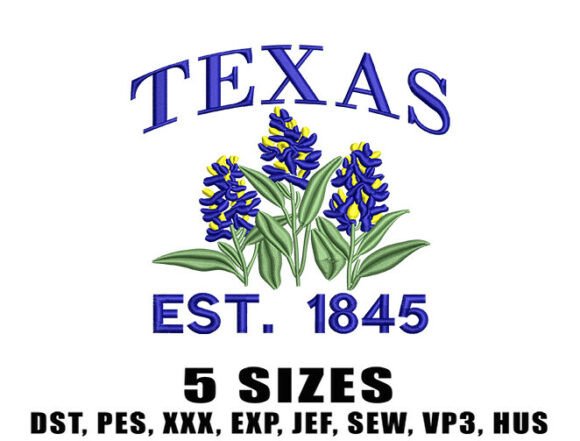
Texas Bluebonnet Embroidery Designs
First Impression: Elegant, Proud, and Instantly Recognizable
As an embroidery designer who’s prepped over 200 craft fair booths—from Austin markets to Chicago pop-ups—I opened Texas Bluebonnet Embroidery Designs expecting charm. What I got was something sharper: quiet elegance with unmistakable regional resonance. It’s not kitschy or cartoonish—it leans into refined botanical illustration, anchored by the bluebonnet’s graceful silhouette and a clean establishment year. That combination reads as premium, not generic. At a glance, it signals state pride without shouting; floral lovers pause, Texans smile, and boutique buyers mentally slot it onto tea towels and linen pouches.
Where It Shines on Craft Fair Products
This design doesn’t just *work* across formats—it elevates them. Here’s how it performs where it counts:
- Tote bag design: Perfect as a centered chest accent (4–5” wide). The bluebonnet’s vertical flow balances the bag’s shape, and the establishment year adds subtle storytelling—ideal for local makers who want to say “we’ve been here, we’re rooted.”
- Apron embroidery: Stunning above the pocket or along the waistband. Its moderate width avoids visual clutter while reinforcing artisan credibility—customers associate this level of detail with handmade quality, not mass production.
- Tea towel embroidery: A standout when placed in the lower corner or centered near the hem. The floral motif feels at home in farmhouse, modern rustic, and even minimalist kitchens—especially on natural linen or oatmeal cotton.
- Embroidered patch: Highly effective at 2.5–3”. Crisp lines hold up well, and the establishment year remains legible. Great for pinning onto denim jackets or tote straps—adds instant personality and regional authenticity.
- Caps and curved surfaces: Use caution. The design includes fine petal edges and small lettering—test stitch-out on scrap baseball caps first. On structured front panels, it reads cleanly; on unstructured back panels, details may blur.
- Pillow covers & fabric pouches: Excellent as a single focal point. The bluebonnet’s symmetry creates visual calm—perfect for gifting and photo-ready displays. Works especially well on textured fabrics like canvas or duck cloth, where stitch definition enhances tactility.
What Makes It Sell—Beyond the Stitch
Texas Bluebonnet Embroidery Designs succeeds because it answers three silent customer questions before they’re asked: Is this local? Is it thoughtful? Does it feel special? At a crowded craft fair, that’s gold. It photographs beautifully for Etsy listings—soft shadows highlight stitch texture, and the contrast between blue thread and neutral fabric pops on mobile screens. As a digital embroidery file, it supports repeatable batch production: consistent spacing, balanced stitch density, and no overly dense fill areas that cause puckering on lightweight cottons.
Careful-Use Notes Every Designer Should Know
Even elegant designs have limits. Here’s what demands attention before cutting fabric:
- Small lettering: The establishment year is charming—but below 2.5”, it risks blurring on textured towels or thick stabilizer. Always test on your target fabric + stabilizer combo.
- Dense stitch areas: Petal centers and stem junctions may compact tightly. Avoid heavy-duty threads or excessive tension—opt for high-quality 40-weight polyester for clarity and drape.
- Dark fabric: Blue-on-navy or charcoal can mute contrast. Consider tonal stitching (navy-on-navy with subtle sheen variation) or switch to white/cream thread for lift.
- Fabric texture: On looped terry or heavily brushed flannel, reduce stitch count where possible—or embrace the softening effect as part of the handmade aesthetic.
- Hoop size & placement: Confirm hoop compatibility before digitizing adjustments. If your machine requires re-hooping for large versions, factor in alignment time during production.
How It Strengthens Your Booth—and Your Brand
A well-chosen embroidery file like Texas Bluebonnet Embroidery Designs does more than decorate—it builds cohesion. When repeated across tote bags, aprons, and patches in matching thread colors, it creates a mini-collection effect that draws eyes and encourages multi-item purchases. In North America—especially across Texas, Oklahoma, and the Southwest—it taps into authentic regional identity, giving your small shop product emotional weight. Customers don’t just buy a tea towel; they buy a keepsake tied to place and memory. That perception lifts perceived value, supports higher price points, and fuels word-of-mouth (“Where’d you get that bluebonnet bag?”).
Practical Designer Notes Before You Stitch
Before committing to 50 tote bags or listing on Etsy:
- Test the machine embroidery design on scrap fabric *exactly* matching your production base—same weave, weight, and finish.
- Check thread contrast under both daylight and booth lighting. Natural light reveals true color; warm LED can shift blues toward purple.
- Review spacing between elements—especially between flower and year—to ensure legibility at your intended size.
- Confirm hoop size requirements. Some versions may need 5×7”, others 4×4”—know before you set up your embroidery machine.
- Inspect stitch density in petal layers. Too dense = stiff fabric; too sparse = loss of dimension. Adjust underlay if needed.
- Use cutaway stabilizer for knits or stretchy fabrics; tear-away works well for stable wovens like cotton duck or linen blend.
- Create at least one real mockup—not just a printable mockup—before finalizing your craft fair display.
- Compare thread colors across multiple fabric swatches. A single blue thread behaves differently on ivory vs. oatmeal vs. cream.
- Verify commercial licensing terms. If selling finished products, ensure your embroidery file permits commercial embroidery use—don’t assume.
Final Thought: A Design That Sells Because It Feels True
Texas Bluebonnet Embroidery Designs isn’t just another floral motif. It’s a quiet ambassador—of place, patience, and craftsmanship. For Etsy sellers building seasonal collections, for boutique makers curating regional gift sets, for embroidery business owners expanding their design assets—it delivers versatility without compromise. It fits seamlessly into handmade product lines that value authenticity over trend-chasing. And at the end of a long craft fair day, when customers linger at your booth asking, “Is that a real bluebonnet?”—that’s when you know the design has done its job.